
Annual Leave in Poland: 20 or 26 Days Under the Labour Code (2026 Guide)
Polish employees get 20 days of annual leave with under 10 years of seniority and 26 days with 10 or more (Kodeks pracy art. 154). Education counts towards seniority, with a university degree worth 8 years.
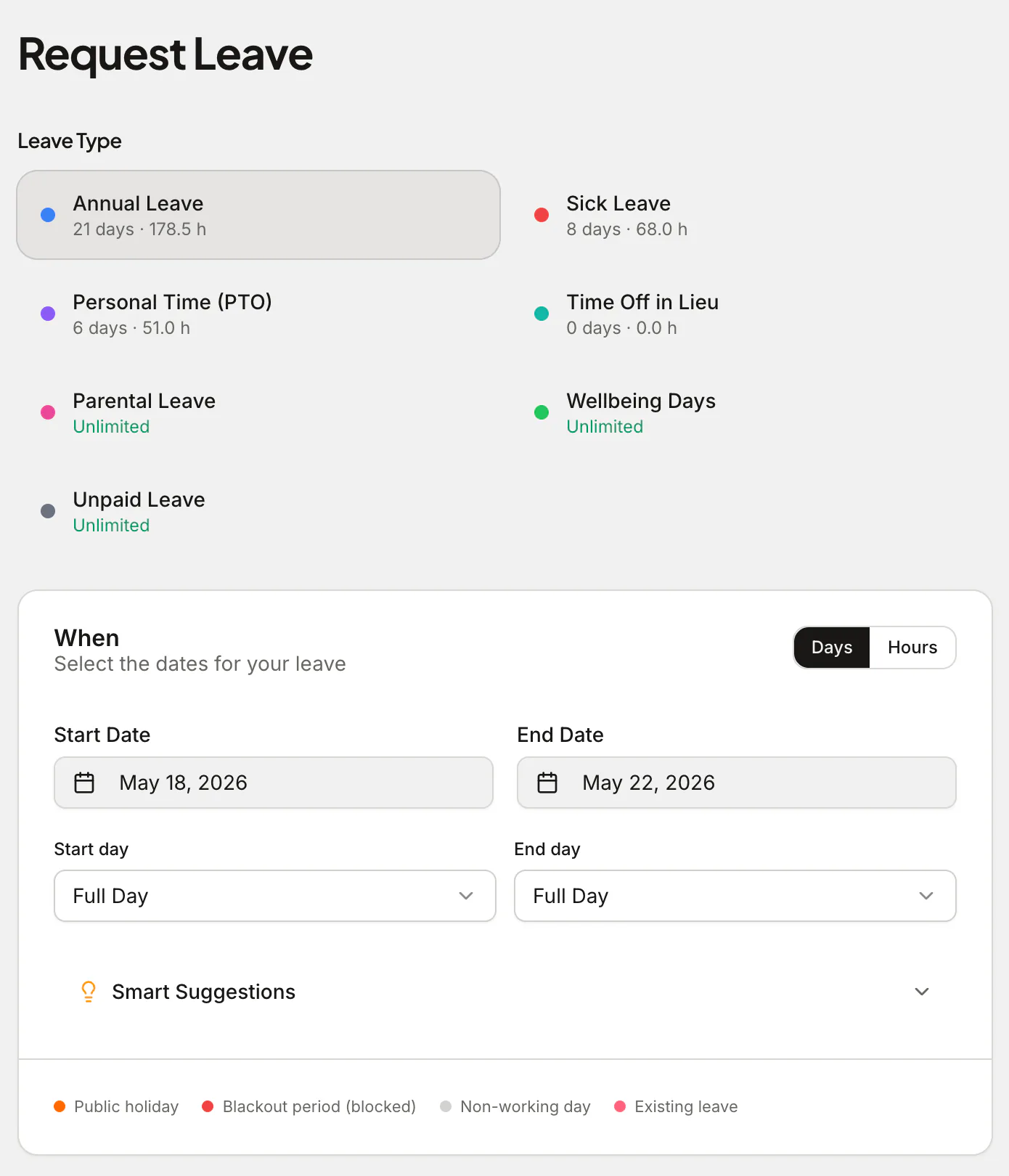
Under the Polish Labour Code (Kodeks pracy, art. 154), an employee gets 20 days of annual leave a year with less than 10 years of seniority, and 26 days with at least 10 years. Seniority counts all previous employment plus a fixed amount for completed education (8 years for a university degree), so many graduates reach 26 days after only 2 years of work.
This guide explains urlop wypoczynkowy in English for employers and expat employees: how the 20/26 split works, how education counts, the 4 days of urlop na żądanie, the 14-day rule, carry-over to 30 September and part-time pro-rata. It reflects the Labour Code as of 2026.
Is annual leave in Poland 20 or 26 days?
Art. 154 § 1 sets two levels:
| Seniority (staż pracy) | Annual leave |
|---|---|
| Less than 10 years | 20 days |
| At least 10 years | 26 days |
These are working days, not calendar days. Leave is granted on days the employee would normally work, and for counting purposes one day of leave equals 8 hours (art. 154² § 1–2). Leave is paid at the pay the employee would have earned had they worked (art. 172), and an employee cannot waive the right to it (art. 152 § 2).
The 10 years are not years with your current employer. Art. 154¹ § 1 counts all previous employment, regardless of gaps and of how earlier jobs ended. An expat who worked under employment contracts before moving to Poland should check with their employer how documented foreign periods are treated.
Does education count towards the 26 days?
Yes. Art. 155 § 1 adds a fixed number of years for the highest school completed:
| Completed education | Years counted |
|---|---|
| Basic vocational school (zasadnicza szkoła zawodowa) | Length of the programme, max 3 years |
| Secondary vocational school | Length of the programme, max 5 years |
| Secondary vocational school for graduates of basic vocational schools | 5 years |
| General secondary school (liceum ogólnokształcące) | 4 years |
| Post-secondary school (szkoła policealna) | 6 years |
| University (szkoła wyższa) | 8 years |
Two rules matter in practice:
- Education periods do not add up. Only one item from the list counts, so a secondary school plus a degree is 8 years, not 12.
- Studying while working: if you studied while employed, either the employment or the study period counts, whichever is more favourable to you (art. 155 § 2). You can't count both.
Example: Kasia finished a master's degree and starts her first job. Her degree counts as 8 years, so she needs 2 years of work to reach 10 years and 26 days.
What changed in 2026?
A 2025 amendment counts more than employment contracts towards seniority. According to the State Labour Inspectorate (PIP), periods under mandate contracts (umowa zlecenia) and other service contracts, agency contracts, and running a business now count, along with certain other periods such as documented paid work abroad other than employment. The rules apply from 1 January 2026 for public finance sector employers and from 1 May 2026 for other employers. Employees must document these periods within 24 months, and there is no claim to top up entitlements for the time before the new rules applied. For someone with years of contract or freelance work, this can be what moves them from 20 to 26 days.
How does leave work in the first job?
Someone starting work for the first time earns leave month by month in the first calendar year: 1/12 of the annual entitlement after each month worked (art. 153 § 1). From the next calendar year onwards, the full annual entitlement is acquired each year (art. 153 § 2).
If an employee reaches the 26-day threshold mid-year after already using their leave for that year, they get top-up leave (urlop uzupełniający, art. 158).
What is urlop na żądanie (on-demand leave)?
Urlop na żądanie is the right to take up to 4 days of leave a year on dates the employee chooses. The employer must grant it, and the employee can ask no later than on the day the leave starts (art. 167²).
Key points:
- It is not extra leave. The 4 days come out of the 20 or 26 days, since the article grants "4 days of leave" under the same chapter on annual leave.
- The 4 days are a limit per calendar year across all employers: if you used 3 on-demand days at your old job, you have 1 left at the new one that year (art. 167³).
- Every employee gets the same 4 days regardless of working time, according to PIP.
- On-demand days are not included in the leave plan (art. 163 § 1).
Do you have to take 14 days in a row?
Leave can be split into parts at the employee's request, but at least one part must last no fewer than 14 consecutive calendar days (art. 162). Calendar days include weekends and public holidays, so in practice that usually means two working weeks in one block, which is about 10 days of leave for someone on a Monday to Friday schedule.
Leave should follow the employer's leave plan (plan urlopów), set taking account of employees' requests and the need to keep work running (art. 163 § 1). An employer may skip the plan if the workplace union agrees, or if there is no union, and then sets leave dates by agreement with the employee (art. 163 § 1¹).
Can annual leave be carried over? The 30 September rule
The employer must grant leave in the calendar year the employee becomes entitled to it (art. 161). Leave not taken in the year must be granted by 30 September of the following calendar year at the latest (art. 168). So 2026 leave that's still open at year end should be used by 30 September 2027.
For the deadline to work, both sides should plan the leave left over from last year early. For how carry-over works in general, see holiday carry-over and leave accrual explained.
Unused leave can be paid out as a cash equivalent (ekwiwalent pieniężny) only when the employment ends or expires (art. 171 § 1), not while the job continues.
How is annual leave calculated for part-time workers?
Part-time leave is pro-rata to working time, based on the full-time figure, and a part day is rounded up to a full day (art. 154 § 2):
| Working time | Under 10 years (20 days) | 10+ years (26 days) |
|---|---|---|
| 1/2 time | 10 days | 13 days |
| 3/4 time | 15 days | 19.5, rounded up to 20 days |
| 1/4 time | 5 days | 6.5, rounded up to 7 days |
The yearly total can never exceed 20 or 26 days (art. 154 § 3). Because leave is granted in hours matching the employee's working day, a half-time employee with 10 days has 80 hours of leave. For the general method, see how to calculate pro-rata holiday entitlement.
Tracking Polish leave in a team
If your Polish team uses a spreadsheet, the two tricky parts are hours-based balances for part-timers and remembering the 30 September deadline. In Absenca, each office has its own work week, public holidays and leave year, leave can be tracked in days or hours, and carry-over is built in. The free plan covers up to 10 people. To compare Poland with other countries, see paid leave by country.
FAQ
I have a university degree and 2 years of work. Do I get 26 days? Yes. A degree counts as 8 years (art. 155), so 2 years of employment gives you 10 years of seniority and 26 days.
Are the 4 on-demand days on top of my 20 or 26 days? No. They are part of your annual leave, and the 4-day limit applies across all your employers in a calendar year.
Do public holidays count as leave days in Poland? No. Leave is only granted on days that are working days for you under your schedule (art. 154²), so a public holiday inside your holiday doesn't use a day.
What happens to leave I don't take this year? It must be granted by 30 September of the next year (art. 168). It can only be paid out when the employment ends.
Does a mandate contract (umowa zlecenia) count towards seniority? Since 2026 it does, if it is documented. The new rules apply from 1 January 2026 for public finance sector employers and from 1 May 2026 for other employers.
Rules can change and individual cases vary; check the current Kodeks pracy on isap.sejm.gov.pl and guidance from PIP.