
Is PTO Required by Law in the US? Federal Rules and State Paid Sick Leave (2026)
No. No federal law requires US employers to give paid vacation, holidays or sick leave. As of 2026, 18 states (counting D.C.) require paid sick leave and Illinois, Maine and Nevada require paid leave for any purpose.
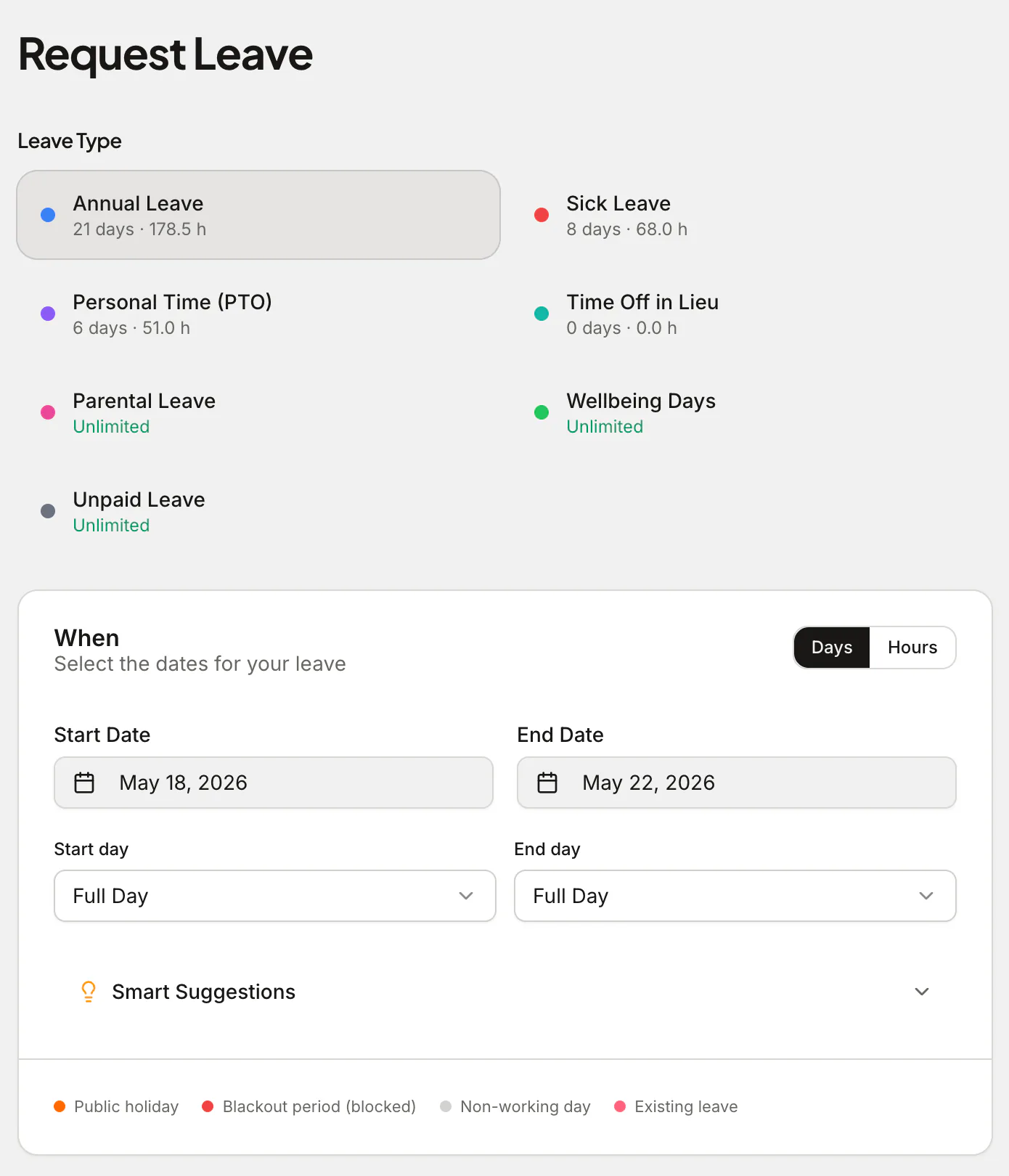
No. No federal law requires US employers to give paid vacation, paid holidays or paid sick leave. What you actually get is set by your state (and sometimes your city) plus your employer's own policy. As of 2026, 18 states (counting Washington, D.C.) require paid sick leave and 3 more require paid leave you can use for any reason. No state on that list requires paid vacation.
This guide covers what federal law says, which states require paid sick leave, what happens to unused vacation when someone leaves, and what a small employer should write into a PTO policy.
Does federal law require paid time off?
No. The Fair Labor Standards Act (FLSA), the main federal wage law, sets minimum wage and overtime rules but stays silent on paid leave. The US Department of Labor puts it plainly: the FLSA "does not require payment for time not worked, such as vacations, sick leave or federal or other holidays." Those benefits are "matters of agreement between an employer and an employee (or the employee's representative)."
There are a few federal exceptions, and none of them is a general vacation entitlement:
- Federal contractors. Workers on contracts covered by the Service Contract Act or the Davis-Bacon and Related Acts may be owed vacation or holiday pay if the contract's wage determination requires it. Separately, Executive Order 13706 has federal contractors let employees earn paid sick leave at 1 hour per 30 hours worked, up to 7 days a year.
- FMLA leave is unpaid. The Family and Medical Leave Act gives eligible employees up to 12 workweeks of unpaid, job-protected leave in a 12-month period. It applies to private employers with 50 or more employees, and the employee needs 12 months of service, 1,250 hours worked in the past 12 months, and a workplace with at least 50 employees within 75 miles.
Do private employers have to give paid federal holidays?
No. The 11 federal holidays, including Memorial Day, Independence Day, Thanksgiving and Christmas, are set by 5 U.S.C. 6103 "for Federal employees". A private business can stay open on July 4 and pay normal rates. The Department of Labor says holiday pay is "generally a matter of agreement". The FLSA doesn't require paid holidays, and it doesn't require extra pay for working on one.
Most employers still give holidays because candidates expect them. That makes it a benefit you choose to offer, not a legal duty. If your team spans countries, our public holidays pages show what each country observes.
Which states require paid sick leave?
Paid sick leave is where state law does most of the work. According to a Congressional Research Service report from April 2026, "18 states (including the District of Columbia) have laws that require private sector employers to provide paid sick leave". Three more states, Illinois, Maine and Nevada, have earned paid leave laws: the leave "may be used for any purpose", not just illness.
Typical accrual is 1 hour of leave for every 30 hours worked, capped at a set number of hours a year. Here's a sample from the CRS table (March 2026):
| State | Accrual rate | Annual cap (benefit year) |
|---|---|---|
| California | 1 hr per 30 worked | up to 80 hours accrued |
| Colorado | 1 hr per 30 worked | 48 hours |
| New York (100+ employees) | 1 hr per 30 worked | 56 hours |
| New York (5–99 employees) | 1 hr per 30 worked | 40 hours |
| Arizona (15+ employees) | 1 hr per 30 worked | 40 hours |
| Nebraska (20+ employees) | 1 hr per 30 worked | 56 hours |
| Connecticut (11+ employees) | 1 hr per 40 worked | 40 hours |
| Vermont | 1 hr per 52 worked | 40 hours |
| Illinois (any purpose) | 1 hr per 40 worked | 40 hours |
| Nevada (50+ employees, any purpose) | about 1 hr per 52 worked | 40 hours |
The full list of paid sick leave jurisdictions in the CRS table: Alaska, Arizona, California, Colorado, Connecticut, District of Columbia, Maryland, Massachusetts, Michigan, Minnesota, Nebraska, New Jersey, New Mexico, New York, Oregon, Rhode Island, Vermont and Washington.
A few things trip up small employers:
- Size thresholds matter. In several states very small employers only owe unpaid sick leave. Examples: Maryland under 15 employees, Massachusetts under 11, Rhode Island under 18. Nebraska has no requirement under 11 employees, Maine none under 10, and Nevada none under 50.
- Coverage is expanding. Connecticut's law covers employers with 11 or more employees in 2026 and will cover employers with at least one employee in 2027.
- Not every worker is covered. Washington, for instance, doesn't require paid sick leave for employees exempt from its state minimum wage law.
- Cities add their own rules. Some employers provide leave "as required by state and local laws", so check your city or county too.
Is paid vacation required in any state?
Not in the states covered here. The state laws above deal with sick leave or general-purpose earned leave. The three "any purpose" states (Illinois, Maine, Nevada) come closest, but their caps are around 40 hours a year, about a week for a full-time employee. Anything beyond that, such as two weeks of vacation or a floating holiday, is your choice as the employer.
Do employers have to pay out unused vacation?
It depends on the state and on your written policy. Federal law doesn't touch it. The Department of Labor only notes that employers aren't federally required to hand over a final paycheck immediately and that "some states, however, may require immediate payment."
States fall into very different camps:
- New York leaves it to the employer's written policy. NYSDOL guidance says that if "an employee has earned vacation time" and "there is no written forfeit policy", the "employer must pay the employee for the accrued vacation."
- California is strict about earned vacation once you offer it. Our guide to California PTO laws, payout and use-it-or-lose-it walks through it.
If you're the employee, read your handbook first. It's usually the document that decides.
What should a small employer put in a PTO policy?
Even where the law requires nothing, a written policy prevents most disputes. Cover these points:
- Leave types. Say whether vacation, sick and personal days are separate or one combined PTO bank. Combined banks can meet sick leave laws, but only if they meet the state's rules on accrual and use.
- Amount and accrual. Decide whether leave is front-loaded on day one or earned per hour or pay period, and set any cap.
- Carry-over and expiry. State what happens to unused days at year end. Our guide to carry-over and accrual covers the options.
- Payout on exit. Write down whether unused vacation is paid out. In states like New York, the written policy decides.
- Holidays. List which holidays are paid, if any.
- Requesting and approving. Set notice periods, who approves, and how you handle busy periods.
- The strictest location. If you hire in several states, apply each state's minimum to the people working there.
Our annual leave policy template gives you a starting draft.
Tracking it once you have a policy
When sick leave accrues per hour, rules differ by state and caps differ by headcount, a spreadsheet gets messy fast. Absenca tracks leave in days, half-days or hours (in 15, 30 or 60-minute steps). It handles accrual, carry-over and balances, and each office gets its own leave types, public holidays and leave year. The free plan covers up to 10 people. Absenca doesn't calculate pay, so payout amounts stay with your payroll.
FAQ
Is PTO required by law in the US? No. No federal law requires paid vacation, paid holidays or paid sick leave for private employees. As of 2026, 18 states (counting D.C.) require paid sick leave, and Illinois, Maine and Nevada require paid leave for any purpose.
Do employers have to give paid vacation? Not under federal law, and not under the state laws listed above. Paid vacation is a benefit employers choose to offer. Once you offer it, state law can control how it accrues and whether it's paid out.
Do I get paid for federal holidays at a private company? Only if your employer's policy says so. Federal holidays legally apply to federal employees, and the FLSA doesn't require paid holidays or extra pay for working them.
How much paid sick leave do states require? Most states use 1 hour per 30 hours worked, with annual caps usually between 40 and 56 hours. California allows up to 80 hours to accrue, and Washington sets no annual accrual cap.
Is FMLA leave paid? No. FMLA gives eligible employees up to 12 workweeks of unpaid, job-protected leave.
Rules vary by state and city and change often. Check your state labor department's official guidance before you rely on them.