
Jury Service Time Off Work in the UK: Pay, Loss of Earnings and Employer Rules
UK employers must give staff time off for jury service but don't have to pay them. Unpaid jurors can claim a loss of earnings allowance from the court of up to £64.95 a day for the first 10 days and £129.91 a day after that (as of 2026).
Your employer in England and Wales must give you time off for jury service, but the law does not require them to pay you while you're away. If they don't pay you, you claim a loss of earnings allowance from the court instead. As of 2026 that's up to £64.95 a day for the first 10 days and up to £129.91 a day after that, and the law protects you from being treated badly or sacked for serving.
Do I get time off work for jury service?
Yes. GOV.UK guidance for employers says plainly: "You must allow an employee time off if they're called up to serve on a jury." This is a separate right to time off, so it doesn't need to come out of your annual leave.
How long you'll be away:
- Jury service usually lasts up to 10 working days. If a trial is likely to run longer, jury staff will let you know.
- If your trial finishes early, you may be asked to sit on another trial.
- You'll usually need to be at court from 10am to 5:30pm, Monday to Friday, but the times can vary.
Once the summons arrives, you must reply within 7 days and confirm whether you can attend. Tell your employer at the same time so they can plan cover.
Does my employer have to pay me for jury duty in the UK?
No. GOV.UK tells employers: "You do not have to pay staff while they're doing jury service, but many employers do." Whether you're paid depends on your contract or staff handbook.
That contract matters. Under section 43M of the Employment Rights Act 1996, not paying you counts as a detriment only if your contract entitles you to pay for that period. So if your contract or policy promises full pay during jury service, your employer has to stick to it.
Employers have three options:
| Option | What the employer does | What the employee claims from the court |
|---|---|---|
| Full pay | Pays as normal, with tax and National Insurance handled in the normal way | Nothing for lost earnings (travel and food can still be claimed) |
| Top-up | Pays the difference between the court allowance and usual take-home pay | Loss of earnings allowance |
| No pay | Fills in the certificate of loss of earnings | Loss of earnings allowance |
How much is the jury service loss of earnings allowance?
Jurors aren't paid for serving, but you can claim back lost earnings and some expenses. The GOV.UK rates for England and Wales, as of 2026:
| Time at court | First 10 days | After 10 days |
|---|---|---|
| More than 4 hours a day | up to £64.95 a day | up to £129.91 a day |
| 4 hours or less a day | up to £32.47 a day | up to £64.95 a day |
You can also claim:
| Expense | Rate |
|---|---|
| Food and drink, up to and including 10 hours a day | £5.71 a day |
| Food and drink, over 10 hours a day | £12.17 a day |
| Car or motorcycle | 31.4p a mile |
| Bicycle | 9.6p a mile |
| One other juror as a passenger | 4.2p a mile |
| Each additional passenger | 3.2p a mile |
Travel is only covered inside England and Wales, and you can't claim for accommodation.
Which form do I need?
- Employees: if your employer has told you they won't pay you, they fill in the certificate of loss of earnings that comes with your jury service letter. Bring it to court on your first day. Employers who top up your pay complete the same certificate.
- Self-employed: fill in the self-employed loss of earnings form and include evidence, such as your most recent tax return.
Can my employer stop me doing jury service?
No. Your employer can't refuse to let you go. What they can do is ask you to try to delay it, if your absence would seriously harm the business. They'll need to write you a letter explaining why, and you send that with your reply to the summons.
How deferral works:
- You reply to the summons and explain your reasons in detail. You need a good reason, and GOV.UK lists "your employer will not give you time off work" as one of them.
- You may be able to move jury service to another date within the next 12 months. You can suggest 3 dates that suit you.
- You can only ask to change the date once.
- If your request is refused, you can appeal in writing to the Jury Central Summoning Bureau.
What protection do I have from detriment or dismissal?
Two sections of the Employment Rights Act 1996 protect you:
- Section 43M (detriment). You have the right not to be subjected to any detriment by your employer, through an act or a deliberate failure to act, because you were summoned for jury service or were absent from work because you attended.
- Section 98B (dismissal). Dismissal is automatically unfair if the main reason is that you were summoned or were absent for jury service. Under section 108(3) you don't need the usual qualifying period of employment to bring this claim.
There's one narrow exception in section 98B(2). The employer has to prove all four of these:
- your absence was likely to cause substantial injury to the business
- they told you about this
- you refused or failed to apply to be excused or to defer
- that refusal or failure was not reasonable.
This is why an employer's deferral letter matters to both sides. If the business really can't spare you, the fair route is to ask for a deferral, not to put pressure on you to skip court.
Jury service policy template for employers
A short policy saves an argument every time a summons lands. Adapt this:
Jury service
- If you receive a jury summons, tell your manager within [3] working days and share a copy.
- You will be given time off for the whole of your jury service. It will not be taken from your annual leave.
- Pay: [Option A] We will pay your normal salary for up to [10] working days. After that we will top up the court's loss of earnings allowance to your normal take-home pay. / [Option B] Jury service is unpaid. We will complete your certificate of loss of earnings so you can claim from the court.
- If you are released early on any day, or the trial ends early, [let your manager know and return to work where reasonable / you are not expected to return that day].
- If your absence would seriously harm the business, we may ask you to apply for a deferral. We will give you a letter explaining why. You will not be disciplined for attending.
- Record jury service in the leave system as "Jury service" so it is kept separate from holiday and sickness.
Be careful with point 3. Once your policy promises pay, section 43M treats withholding it as a detriment.
Tracking jury service alongside other leave
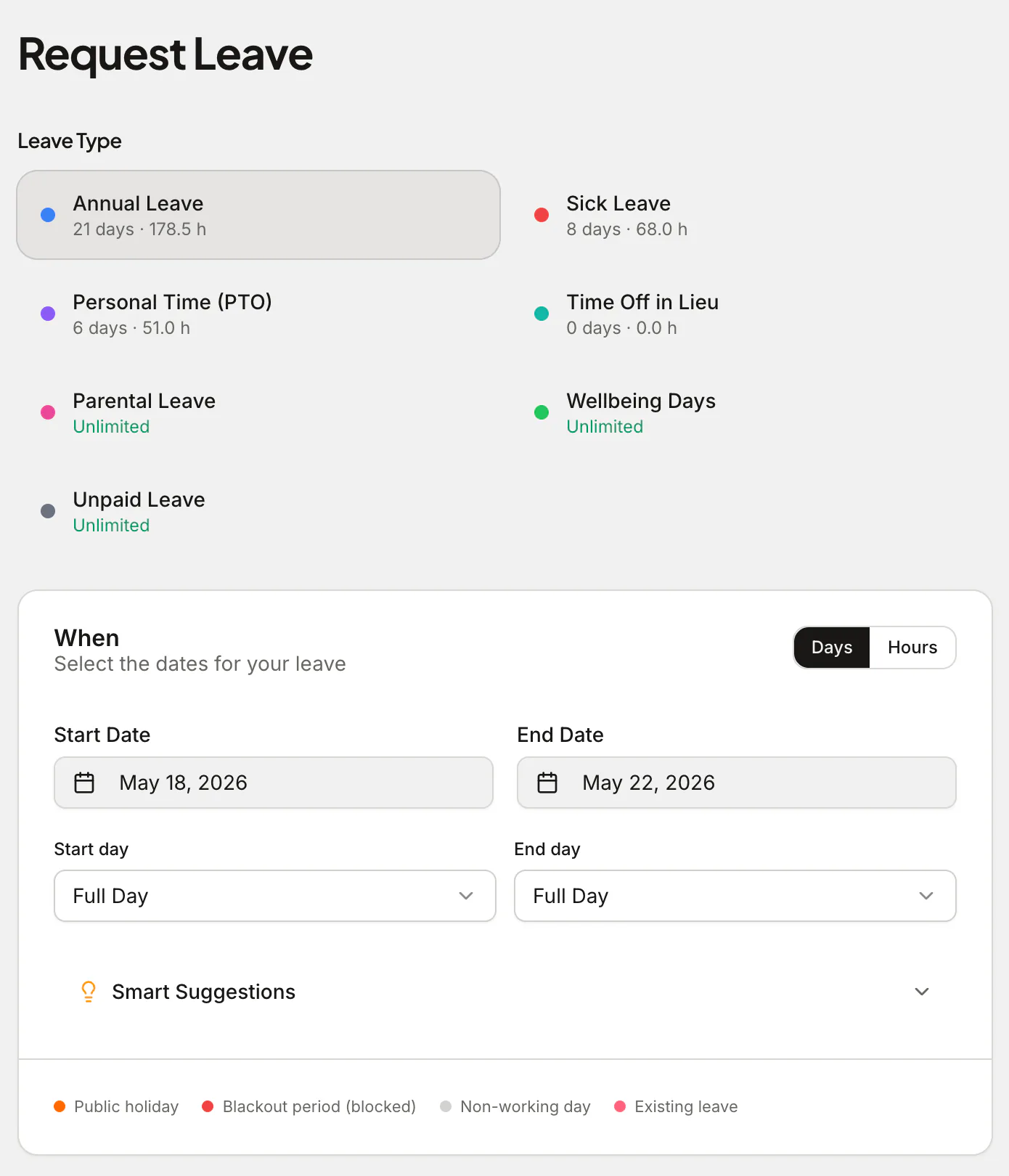
Jury service shouldn't eat into anyone's holiday balance, so record it as its own leave type. In Absenca you can add a "Jury service" leave type for an office, track it in days or half-days, and let it show on the team calendar so managers can see who's out. The Free plan covers up to 10 people and 2 leave types. Absenca records the absence but doesn't calculate pay, so any top-up still runs through payroll.
For related rules, see can my employer refuse my holiday request, our annual leave policy template and compassionate and bereavement leave.
FAQ
Do I have to use my annual leave for jury service? No. Your employer must give you time off for jury service, which is a separate right from your holiday entitlement, so it doesn't have to come out of your annual leave.
Can I be sacked for doing jury service? Dismissing you mainly because you were summoned, or because you were absent for jury service, is automatically unfair under section 98B of the Employment Rights Act 1996. You don't need two years' service to claim.
How much do you get paid for jury service in the UK? The court doesn't pay a wage. You can claim loss of earnings of up to £64.95 a day for the first 10 days (more than 4 hours at court), rising to £129.91 a day after that, plus travel and food (England and Wales rates, as of 2026).
Does this apply in Scotland and Northern Ireland? The rates and summons process above are for England and Wales. Scotland and Northern Ireland have their own jury service rules. The employment protections in sections 43M and 98B extend to Scotland.
Rules can change and vary across the UK. Check the current guidance on GOV.UK and legislation.gov.uk before relying on them.