
Sick During Annual Leave: Do You Get the Holiday Days Back? (UK, Ireland, Germany, France)
Yes. If you fall ill on holiday in the UK, Ireland, Germany or France, the sick days can be taken back as annual leave, provided you report the illness and give the evidence required: self-certification or a fit note in the UK, a doctor's certificate in Ireland and Germany, an arrêt de travail in France.
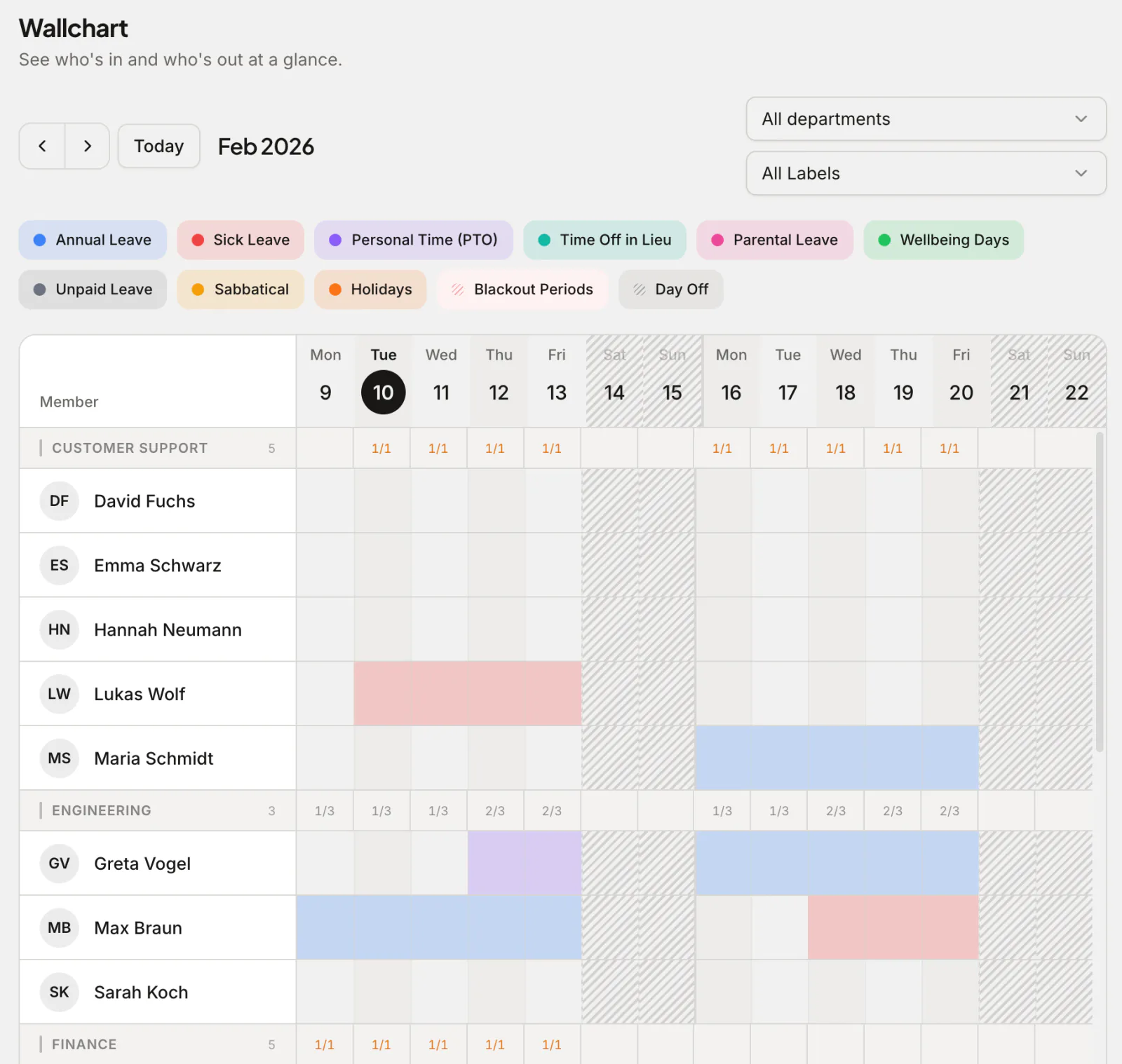
Yes. In the UK, Ireland, Germany and France, if you fall ill during annual leave you can get the sick days back as holiday, as long as you report the illness and provide the evidence each country asks for. What differs is the paperwork: a UK employee can self-certify a short illness, while in Ireland and Germany only days covered by a doctor's certificate are credited back, and in France the sick note has to reach your employer.
The logic is the same everywhere: annual leave is for rest, sick leave is for recovery, and you can't rest while ill. Below is what each country requires as of 2026, and what a manager should do when "I was sick for half my holiday" lands in their inbox.
Sick on holiday: what are the rules in each country?
| Country | The rule | Evidence needed | If you can't use the days that year |
|---|---|---|---|
| UK | If you're ill just before or during your holiday, you can take it as sick leave instead (GOV.UK) | Self-certification for up to 7 days; a fit note if ill more than 7 days in a row, weekends included | Statutory holiday lost to sickness carries over; under the Working Time Regulations, reg. 13(15), it must be taken within 18 months of the end of the leave year it came from |
| Ireland | Certified sick days don't count as annual leave, and you take the holiday later (Citizens Information) | A medical certificate from your GP, given to your employer when you're back | If illness stops you taking leave, it can be carried over for up to 15 months after the end of the year it was earned |
| Germany | Days of illness during Urlaub proven by a doctor's certificate are not counted against annual leave (§ 9 BUrlG) | An ärztliches Zeugnis (doctor's certificate) covering each sick day; report the illness to your employer without delay (§ 5 EntgFG) | Transferred leave must normally be taken by 31 March of the next year (§ 7(3) BUrlG); if illness keeps you from taking it, the Federal Labour Court (BAG, 7 August 2012, 9 AZR 353/10) lets statutory leave run until 15 months after the end of the leave year |
| France | An employee on arrêt maladie during congés payés has the right to have those days carried over (Cour de cassation, 10 September 2025, no. 23-22.732) | An arrêt de travail from a doctor, sent to the CPAM and the employer within 48 hours | Leave you couldn't take because of non-work-related sick leave gets a 15-month carry-over period (Service-Public.fr) |
These are the statutory minimums. Your contract or collective agreement can be more generous, and a company policy can set how and when to report illness, but not take away the statutory right.
I fell ill during annual leave in the UK: what do I do?
Tell your employer as soon as you can, through your normal sickness reporting procedure, and ask for the days to be treated as sick leave. GOV.UK: "If an employee is ill just before or during their holiday, they can take it as sick leave instead." The usual evidence rules apply: self-certify for 7 days or less; a fit note if you're ill for more than 7 days in a row, non-working days included.
Two details catch people out:
- Pay. When holiday is changed to sick leave, GOV.UK says the employee is paid Statutory Sick Pay for those days, and that this counts towards the holiday pay already received. The exceptions are employees who don't qualify for SSP and those being paid occupational (company) sick pay.
- Carry-over. If sickness means you can't use your statutory leave in the leave year, you carry it forward. Regulation 13(15) of the Working Time Regulations 1998 says it must be used within 18 months of the end of the leave year in which it arose.
Sick during vacation in Germany: do the days come back?
Yes, but only the days a doctor has certified. § 9 of the Bundesurlaubsgesetz says that if an employee falls ill during their holiday, the days of incapacity proven by a doctor's certificate are not counted against annual leave.
That is stricter than the normal rule in § 5 of the Entgeltfortzahlungsgesetz, where a certificate is only due once an illness lasts more than three calendar days. Because § 9 BUrlG credits back only days that are nachgewiesen, a two-day stomach bug without a doctor's visit stays holiday. Also:
- Report it straight away. § 5(1) EntgFG requires you to tell your employer about the illness and how long it's expected to last without delay. If you're abroad, § 5(2) adds reporting where you can be reached.
- The holiday doesn't stretch by itself. The credited days go back into your Urlaubsanspruch. When you take them is set under § 7(1) BUrlG, which means agreeing new dates with your employer; you don't just stay away longer.
Ireland: sick during annual leave with a medical certificate
According to Citizens Information, the Irish government's information service, you should get a medical certificate from your GP as soon as possible covering the sick days, and give it to your employer when you return. The certified days then don't count as annual leave and you take them later. If long-term illness stops you taking your leave at all, you can carry it over for up to 15 months after the end of the year it was earned, and be paid for it if you leave within that time.
France: arrêt maladie pendant les congés payés
On 10 September 2025 the Cour de cassation (chambre sociale, appeal no. 23-22.732) ruled, in line with EU law, that an employee placed on arrêt maladie during paid leave has the right to have those leave days carried over, provided they notified the employer of the sick note. The employee's obligations are unchanged: get an arrêt de travail, send it to the CPAM and the employer within 48 hours, and follow the medical instructions and checks. Service-Public.fr adds that leave you couldn't take because of non-work-related illness gets a 15-month carry-over period, counted from when your employer informs you of your remaining leave after you return.
What should a manager do when an employee is sick on holiday?
Treat it as a routine correction, not a favour:
- Ask for the evidence your country requires, nothing more. A UK self-certification for a 3-day illness is enough; for a German or Irish employee, ask for the doctor's certificate covering those days.
- Re-record the days. Change the certified days from annual leave to sick leave, so the holiday balance goes back up and your sickness records stay complete.
- Agree new dates for the returned days under your normal approval process, rather than letting the absence quietly run on.
- Watch the deadline. If the person can't realistically use the days before the leave year ends, note the carry-over and when it expires (18 months in the UK, 15 months in Ireland, France and, under case law, Germany for illness-related carry-over, as of 2026). Our guide to holiday carry-over explains how carry-over interacts with accrual.
- Write it into your policy so nobody has to argue it case by case. Our free sick leave policy template and annual leave policy template both have room for a "sickness during holiday" clause.
If you use absence scoring such as the Bradford Factor, the converted days now count as sickness, so read any change in context.
In Absenca, an admin can add the days back to a person's annual leave balance with a balance adjustment and a note on why, and log the sick days under a sick leave type so the team calendar shows what really happened. It works on the Free plan for teams of up to 10 people.
FAQ
I was only sick for one day of my holiday. Do I get it back?
In the UK, yes: report it and self-certify, as you would for a day off sick at work. In Germany and Ireland, only days covered by a doctor's certificate are credited back, so a single day needs a doctor's note too. In France, you need an arrêt de travail sent to your employer.
Can I just extend my holiday by the days I was ill?
Not on your own. The days go back into your balance, and you book them like any other leave. In Germany, § 7(1) BUrlG leaves the timing of leave to be set with the employer, taking your wishes into account.
I got sick abroad on holiday. Does a foreign doctor's note count?
Report the illness under your normal procedure and get a local doctor's note; in Germany, § 5(2) EntgFG sets specific reporting duties for illness abroad. Ask your employer early what they need.
Can I carry over holiday I lost because I was sick?
Yes, within limits: 18 months after the end of the leave year in the UK (statutory leave), 15 months in Ireland and France. In Germany, transferred leave normally has to be taken by 31 March of the next year (§ 7(3) BUrlG), but where illness stopped you taking it, statutory leave only lapses 15 months after the end of the leave year (BAG, 9 AZR 353/10).
Does this apply if my child or partner was sick, not me?
The rules here cover the employee's own illness. Looking after a sick family member doesn't turn holiday into sick leave, though other types of leave may apply. For statutory holiday minimums in other countries, see our paid leave by country guide.
Rules change and vary by contract and collective agreement; check the official source for your country (GOV.UK, Citizens Information, gesetze-im-internet.de, Service-Public.fr) before acting on this.