
PTO Accrual Rate and Cap: How to Calculate PTO Accrual per Pay Period (With Examples)
Divide the yearly PTO allowance in hours by your pay periods (26 biweekly, 24 semi-monthly) or by 2,080 hours for a per-hour rate. 120 hours a year is 4.62 hours per biweekly paycheck. Then cap balances at 1.5 to 2 times the yearly accrual.
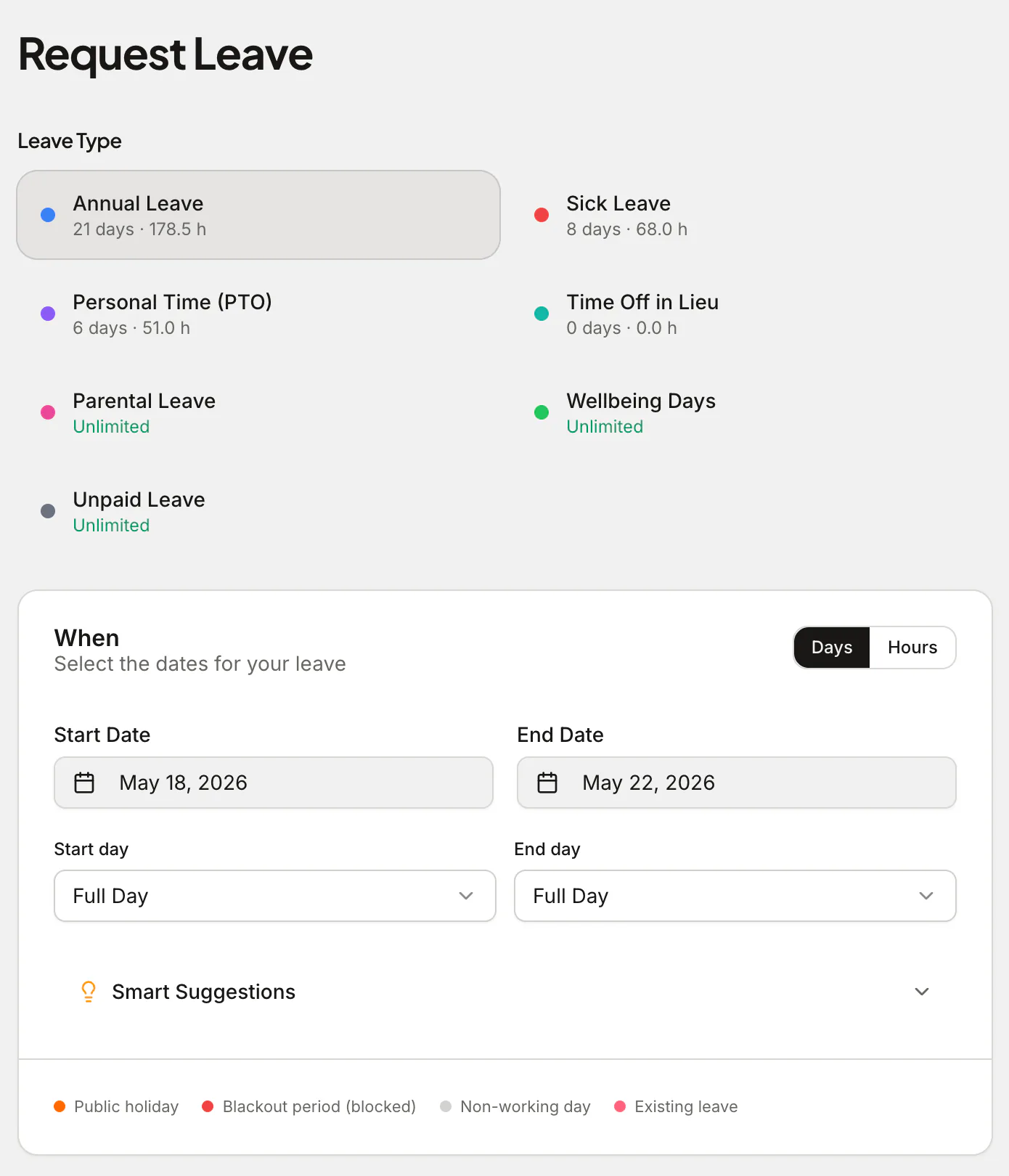
To set a PTO accrual rate, decide the yearly allowance in hours and divide it by your pay periods (26 for biweekly, 24 for semi-monthly) or by the hours in a full-time year (2,080) for a per-hour rate. So 15 days (120 hours) works out to 4.62 hours per biweekly paycheck, 5 hours per semi-monthly paycheck, or about 0.0577 hours per hour worked. Then set a cap at 1.5 to 2 times that yearly amount, so balances stop growing without anyone losing time they have already earned.
The rest of this guide covers the choices behind those numbers: accrual or front-loading, which formula fits your payroll, how to size a cap and what to do about new hires and part-timers.
Is PTO accrual required by law?
There's no federal requirement for paid vacation in the US. The Department of Labor says the Fair Labor Standards Act "does not require payment for time not worked, such as vacations", and that these benefits are a matter of agreement between employer and employee. Your accrual rate is a policy decision. State law still matters in two places, though: what happens to time once it's earned (vacation payout and forfeiture) and paid sick leave, which several states require to accrue at a minimum rate. More on this in is PTO required by law in the US.
Accrual vs front-loaded PTO: which should you choose?
| Accrual | Front-loading | |
|---|---|---|
| How it works | Hours are earned each pay period or per hour worked | The whole year's allowance goes in on day one of the leave year |
| Balance on day one | Close to zero | Full allowance |
| Risk for the employer | Low, since people can only use what they've earned | Someone takes most of the year's PTO and then leaves |
| Admin | Needs a formula and payroll data every period | One grant a year, plus pro-rating for new hires |
| Best for | Hourly staff, high turnover, variable hours | Salaried teams, low turnover, simple policies |
Accrual ties PTO to time worked, which is fair for hourly and variable-hours staff. Its downside is that new hires can't take a week off in their first month. Front-loading is simpler and lets people plan a long trip early in the year. Many small businesses split it by group: front-load salaried staff and accrue for hourly staff.
How do you calculate PTO accrual per pay period?
Accrual per pay period = annual PTO hours ÷ pay periods per year
Convert days to hours first (days × hours in a normal workday). Using 8-hour days:
| Annual PTO | Hours | Weekly (52) | Biweekly (26) | Semi-monthly (24) | Monthly (12) |
|---|---|---|---|---|---|
| 10 days | 80 | 1.54 | 3.08 | 3.33 | 6.67 |
| 15 days | 120 | 2.31 | 4.62 | 5.00 | 10.00 |
| 20 days | 160 | 3.08 | 6.15 | 6.67 | 13.33 |
| 25 days | 200 | 3.85 | 7.69 | 8.33 | 16.67 |
Biweekly example. You offer 15 days (120 hours) and pay every other Friday. 120 ÷ 26 = 4.615, so each paycheck adds 4.62 hours. After 10 paychecks the employee has earned 46.2 hours, nearly six days.
Semi-monthly example. Same 120 hours, paid on the 15th and the last day of the month. 120 ÷ 24 = 5 hours per paycheck. That comes out even, which is one reason semi-monthly accrual is easy to explain.
Biweekly and semi-monthly are easy to mix up. Biweekly gives 26 paychecks a year, semi-monthly gives 24, so the rate per paycheck isn't the same even when the yearly total is.
Watch the rounding. 4.62 × 26 = 120.12 hours, a little over the policy amount. Use at least three decimals in your system, or say in the policy that the annual total wins.
How do you calculate PTO accrual per hour worked?
Accrual per hour worked = annual PTO hours ÷ full-time hours per year
A full-time year is 40 hours × 52 weeks = 2,080 hours.
| Annual PTO | Per hour worked | Roughly 1 hour of PTO for every… |
|---|---|---|
| 80 hours (10 days) | 0.0385 | 26 hours worked |
| 120 hours (15 days) | 0.0577 | 17.3 hours worked |
| 160 hours (20 days) | 0.0769 | 13 hours worked |
Hourly example. Your policy is 120 hours for a full-time equivalent, so 0.0577 per hour worked. An employee who works 25 hours this week earns 25 × 0.0577 = 1.44 hours of PTO. Across a year at that pace (1,300 hours), they earn 75 hours.
Decide up front whether overtime hours earn PTO. Many policies count regular hours only, so that one heavy month doesn't inflate the balance. Whichever you choose, write it down.
Paid sick leave can have a legal floor. In California, for example, Labor Code section 246 requires employees to accrue paid sick days "at the rate of not less than one hour per every 30 hours worked". If a combined PTO bank is also meant to satisfy a sick leave law, check that your rate meets that state's minimum.
How do you choose a PTO accrual cap?
A cap is the maximum balance someone can hold. Once a balance reaches it, accrual stops until they take some time off. Nothing they've already earned is lost. Caps are usually set as a multiple of the yearly accrual:
| Annual accrual | 1.5× cap | 2× cap |
|---|---|---|
| 80 hours | 120 hours | 160 hours |
| 120 hours | 180 hours | 240 hours |
| 160 hours | 240 hours | 320 hours |
Worked example. With 120 hours a year accrued biweekly and a 180-hour cap, an employee at 180 hours earns nothing on their next paycheck. They take a 40-hour week off, their balance drops to 140, and accrual starts again from the next paycheck.
Pick the multiple based on what worries you more. A low cap (around 1.5×) keeps people taking regular breaks and keeps the liability on your books small. A higher cap (2×) gives room for a long trip once every couple of years.
Can you have a cap and carry-over limits together?
Yes, but they do different jobs. A cap stops accrual during the year. A carry-over limit decides how much rolls into the next leave year. A "use it or lose it" rule takes away earned time at year end, and some states don't allow that. California is the clearest example. Labor Code section 227.3 says a contract or policy "shall not provide for forfeiture of vested vacation time upon termination", and unused vested vacation must be paid as wages at the final rate when someone leaves. If you have staff there, read California PTO laws: payout and use-it-or-lose-it before you write a carry-over rule. For how carry-over and accrual interact in general, see holiday carry-over and leave accrual explained.
How should accrual work for new hires?
- Accrual policies. Start accruing on the first pay period. If you add a waiting period, decide whether it delays earning or only using PTO. Delaying use is gentler. For California paid sick leave, the law sets this already: employees can use accrued sick days "beginning on the 90th day of employment".
- Front-loaded policies. Pro-rate the first grant by the months left in the leave year. Someone joining on April 1 in a calendar leave year gets 120 × 9 ÷ 12 = 90 hours.
- Mid-period starts. Either give a partial first accrual or start from the first full pay period. Both are fine as long as you do it the same way for everyone.
How do you handle part-time employees?
Per-hour accrual handles part-timers automatically, because they earn on the hours they actually work. If you accrue per pay period, scale the rate by their share of a full-time schedule:
Part-time accrual = full-time rate × (contracted weekly hours ÷ 40)
A 20-hour employee on a 120-hour policy earns 60 hours a year, or 60 ÷ 26 = 2.31 hours each biweekly paycheck. Scale the cap the same way (90 hours at 1.5×), or a part-timer on the full-time 180-hour cap could bank three years of their own PTO.
How do you run PTO accrual in a leave tool?
A spreadsheet handles the formula, but cap checks, rounding and carry-over at year end are where it starts to drift. In a leave tool you enter the policy once and the balances update themselves. Absenca handles accrual and carry-over on the free plan for up to 10 people. Leave can be tracked in days, half-days or hours (in 15, 30 or 60-minute steps), and each office has its own leave year and leave types, so a salaried team and an hourly team can each follow their own rules. Employees see their remaining balance when they request time off. Absenca tracks leave, not pay, so payouts still go through payroll.
FAQ
What is a good PTO accrual rate for a small business? Start from the yearly allowance you want to offer, then divide by your pay periods. A 15-day (120-hour) policy works out to 4.62 hours per biweekly paycheck or 5 hours per semi-monthly paycheck.
How many hours of PTO is 1 hour per 30 hours worked? About 0.0333 hours per hour worked. A full-time employee working 2,080 hours earns roughly 69 hours a year at that rate.
Is front-loading PTO better than accrual? It's simpler and more generous to staff, but you carry more risk when someone uses most of their allowance early and then leaves. Accrual suits hourly and high-turnover teams better.
What happens when an employee hits the PTO cap? They stop earning new PTO until they take time off and their balance drops below the cap. Earned hours stay in their balance.
Should overtime hours earn PTO? That's up to your policy unless a state rule says otherwise. Many employers accrue on regular hours only. Whichever you choose, put it in writing.
PTO and sick leave rules vary by state and city and can change. Check your state labor department's official guidance before you finalize a policy (rules described as of 2026).