
Statutory Sick Pay 2026: SSP From Day One, How Much It Pays and Who Qualifies
From 6 April 2026, Statutory Sick Pay is paid from the first full day of sickness with no waiting days or earnings threshold, at £123.25 a week or 80% of average weekly earnings, whichever is lower, for up to 28 weeks.
Statutory Sick Pay (SSP) in 2026 is paid from the first full day of sickness absence. The three unpaid waiting days and the earnings threshold are gone. From 6 April 2026 to 5 April 2027, SSP is £123.25 a week or 80% of the employee's average weekly earnings, whichever is lower, and it is paid for up to 28 weeks.
These changes come from the Employment Rights Act 2025. Below is what changed, how to work out the amount, who qualifies, when a fit note is needed and how SSP fits with annual leave. All figures are for 2026/27 as of 2026.
What changed to SSP in April 2026?
Sections 10 to 13 of the Employment Rights Act 2025 amend the SSP rules for Great Britain and Northern Ireland. All four sections came into force on 6 April 2026.
| Before 6 April 2026 | From 6 April 2026 | |
|---|---|---|
| Waiting days | No SSP for the first three qualifying days | Payable from the first full day of sickness |
| Earnings threshold | Had to earn at least the lower earnings limit | None: "regardless of their earnings" |
| Weekly rate | Flat rate | £123.25 or 80% of average weekly earnings, whichever is lower |
| Maximum duration | 28 weeks | 28 weeks (unchanged) |
GOV.UK sums up the new rules this way. SSP is "available to all eligible employees regardless of their earnings", "payable from the first full day of sickness absence" and paid at 80% of average weekly earnings or £123.25, whichever is lower.
Are SSP waiting days removed?
Yes. Under the old law, "Statutory sick pay shall not be payable for the first three qualifying days in any period of entitlement." The 2025 Act deletes that rule, and a single day of sickness can now start a claim.
Under the transitional guidance, waiting days "no longer apply from 6 April 2026". SSP is still not paid for waiting days that fell before that date.
A sick day still has to be a full working day. GOV.UK's employer guide says: "You cannot count a day as a sick day if an employee has worked for a minute or more before they go home sick."
How much is SSP in 2026?
For 2026/27 the weekly rate is the lower of:
- £123.25, or
- 80% of the employee's average weekly earnings (AWE).
AWE is usually averaged over the 8 weeks before the absence. The relevant period ends on "the last normal payday before the first complete day of sickness". Employees with less than 8 weeks' pay still qualify.
80% of AWE equals £123.25 at roughly £154 a week. So anyone earning less than that gets 80% of their earnings, and anyone earning more gets the flat £123.25.
| Average weekly earnings | 80% of AWE | Weekly SSP |
|---|---|---|
| £100 | £80.00 | £80.00 |
| £150 | £120.00 | £120.00 |
| £185 | £148.00 | £123.25 |
| £500 | £400.00 | £123.25 |
SSP is paid only for qualifying days, the days the employee normally works. If someone is off for part of a week, divide the weekly rate by the number of qualifying days, then multiply by the days they were sick. HMRC's worked example uses AWE of £185 and a five-day week. The daily rate is £123.25 ÷ 5 = £24.65, so three sick days pay £73.95.
SSP goes through payroll like wages, with tax and National Insurance deducted. An employer can pay more through a company sick pay scheme but cannot pay less than SSP.
Who is eligible for SSP?
According to GOV.UK, an employee must:
- have an employment contract
- have done some work under that contract
- have been sick for at least one full working day
- give notice and proof of illness when needed
There is no longer a minimum earnings test. Employees "can qualify for sick pay from more than one job". People are not eligible if they have already had the maximum 28 weeks or are getting Statutory Maternity Pay.
What if someone earning £125 to £154.05 a week was already off sick on 6 April? The transitional guidance protects them. If they were getting SSP before 6 April 2026 and were still off sick on that date, they get the flat £123.25 instead of 80% of AWE. That protection ends when they return to work. A later absence is paid at 80% of AWE, even if it links to the earlier one.
How long is SSP paid and what are linked periods?
SSP is paid for up to 28 weeks. Separate absences link together and count as one period if each lasts at least one full working day and they are 8 weeks or less apart. Eligibility ends after a continuous series of linked periods that lasts more than 3 years. If SSP is going to end while the employee is still sick, the employer must give them form SSP1 on or before the beginning of the 23rd week.
When do you need a fit note for SSP?
- Employees must report sickness within the employer's deadline, or within 7 days if the employer hasn't set one.
- An employer can only ask for a fit note if the employee is off for more than 7 days in a row, counting non-working days.
- Employers "cannot withhold SSP if the employee is late sending you a fit note."
- A GP or hospital doctor, registered nurse, occupational therapist, pharmacist or physiotherapist can issue a fit note, printed or digital. If the employer agrees, the employee can give other suitable evidence instead.
How does SSP interact with annual leave?
From the GOV.UK employer guide:
- "Statutory annual leave is accrued while the employee is off work sick."
- Annual leave "can be taken during sick leave". Taking it doesn't interrupt the period of incapacity.
- "You cannot force your employees to take annual leave when they're eligible for sick leave."
So holiday keeps building up during a long absence. If someone falls ill during booked holiday, see sick during annual leave for how to treat those days. Your written sick leave policy should now explain day-one reporting, because short one- and two-day absences that used to be unpaid now cost SSP.
Keeping track of sick days
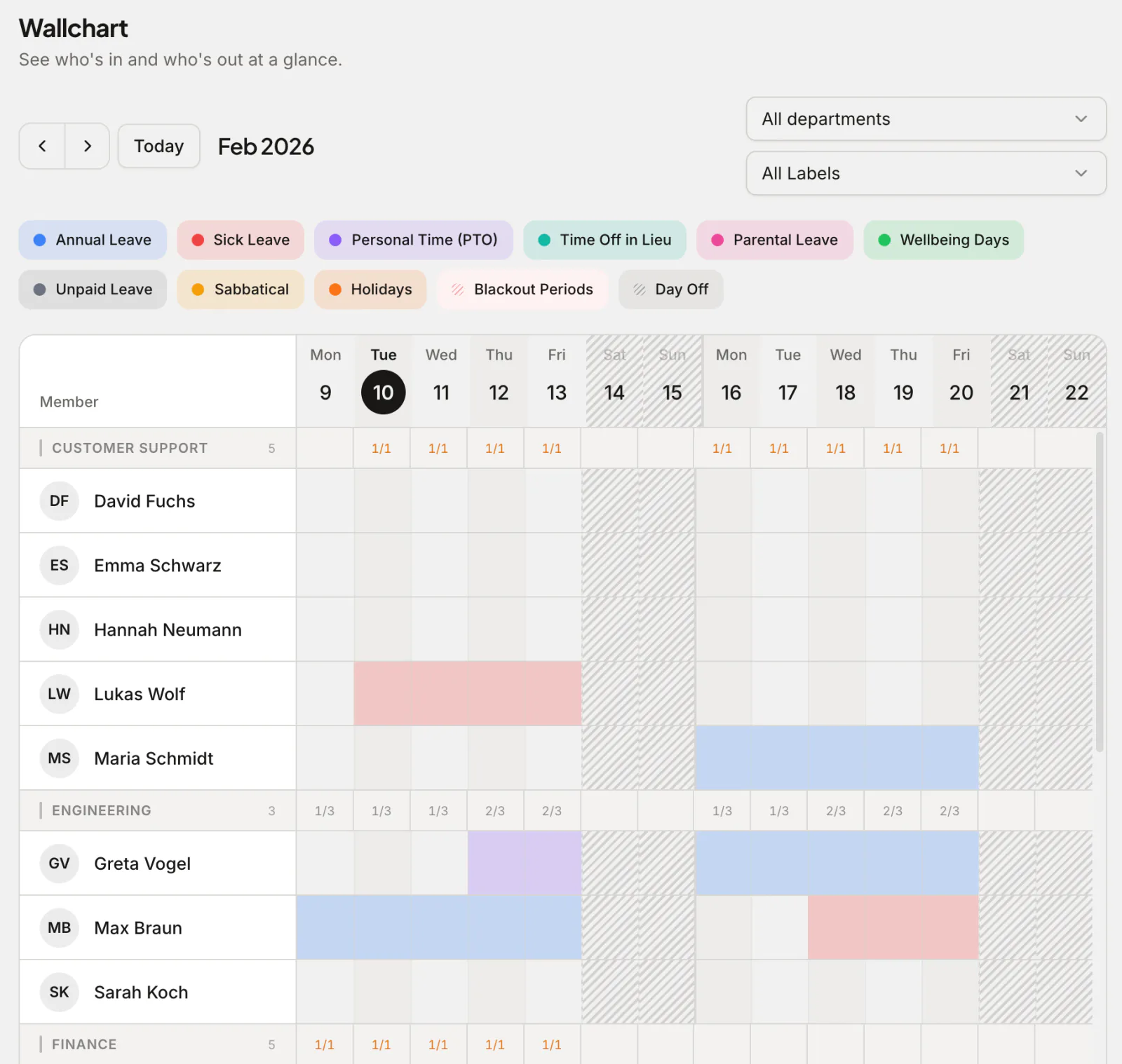
Day-one SSP makes short absences matter for payroll, so you need an accurate record of each sick day and how absences link. In Absenca, staff log sick leave in days, half-days or hours. Managers then see it on the team wallchart next to annual leave, and reports can be exported to CSV for payroll. Absenca does not calculate SSP or any other pay. On Pro, the Bradford Factor report shows patterns of short, frequent absence.
FAQ
Is SSP paid from day one in 2026? Yes. For absences starting on or after 6 April 2026, SSP is payable from the first full day of sickness absence. Waiting days no longer apply.
How much is statutory sick pay per week in 2026? £123.25 a week or 80% of your average weekly earnings, whichever is lower, from 6 April 2026 to 5 April 2027.
Do I need to earn a minimum amount to get SSP now? No. Since 6 April 2026, SSP is available to eligible employees regardless of their earnings. Lower earners get 80% of their average weekly earnings.
Can my employer refuse SSP if my fit note is late? No. GOV.UK says employers cannot withhold SSP if the fit note arrives late. A fit note can only be required after more than 7 days off in a row.
Do I still build up holiday while on SSP? Yes. Statutory annual leave keeps accruing while you are off sick, and your employer cannot force you to take holiday instead of sick leave.
SSP rules and rates change each tax year and can differ for some workers. Check the current figures on GOV.UK.